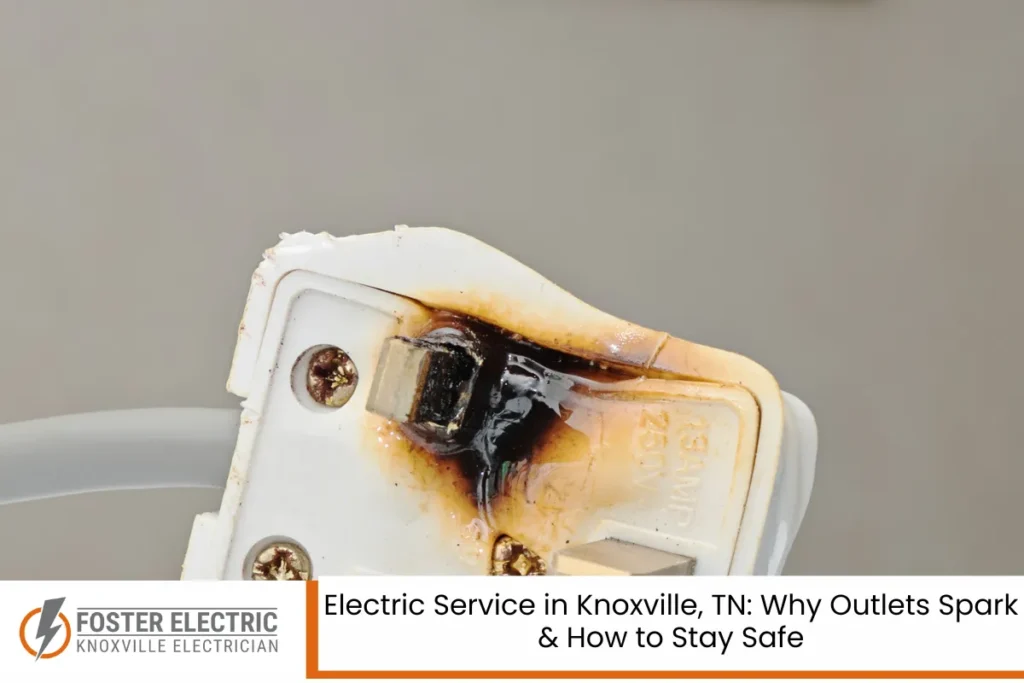

Electric service is something most Knoxville homeowners take for granted until something goes wrong. Maybe the lights flicker when the air conditioner kicks on. Maybe a fuse blows every time you run the microwave and the toaster at the same time. Or maybe you have noticed scorch marks around your panel and wonder whether your house is at risk.
These are not small concerns. Outdated electrical systems struggle to keep up with modern loads, and overloaded circuits are one of the leading causes of residential fire. The good news is that understanding the difference between fuses and breakers gives you the knowledge to recognize problems early and make smarter decisions about your home.
This article breaks down how each safety device works, where you still find them in Knoxville homes, and when it makes sense to call a professional electrician for an evaluation or upgrade. Everything here aligns with Tennessee codes so you can act with confidence.
Key Takeaways
- Fuses and circuit breakers both serve as protective devices that prevent electrical overloads and fires, but they work through entirely different mechanisms and offer different levels of convenience.
- Most new installations in Knoxville use breaker panels, while many older homes built before the 1960s or 1970s still rely on fuse boxes for overcurrent protection.
- Upgrading from a fuse box to a modern breaker panel can improve safety, add capacity for today’s appliances, and increase your property’s resale value when the project is handled by a licensed electrician.
- Knoxville homeowners should follow Tennessee electrical codes and never attempt main panel or service work without proper permits and professional expertise.
- Foster Electric can inspect, repair, or upgrade panels and breaker panels for local homeowners across Knoxville and surrounding areas.
Fuses in Knoxville Homes: How They Work and Where You Still See Them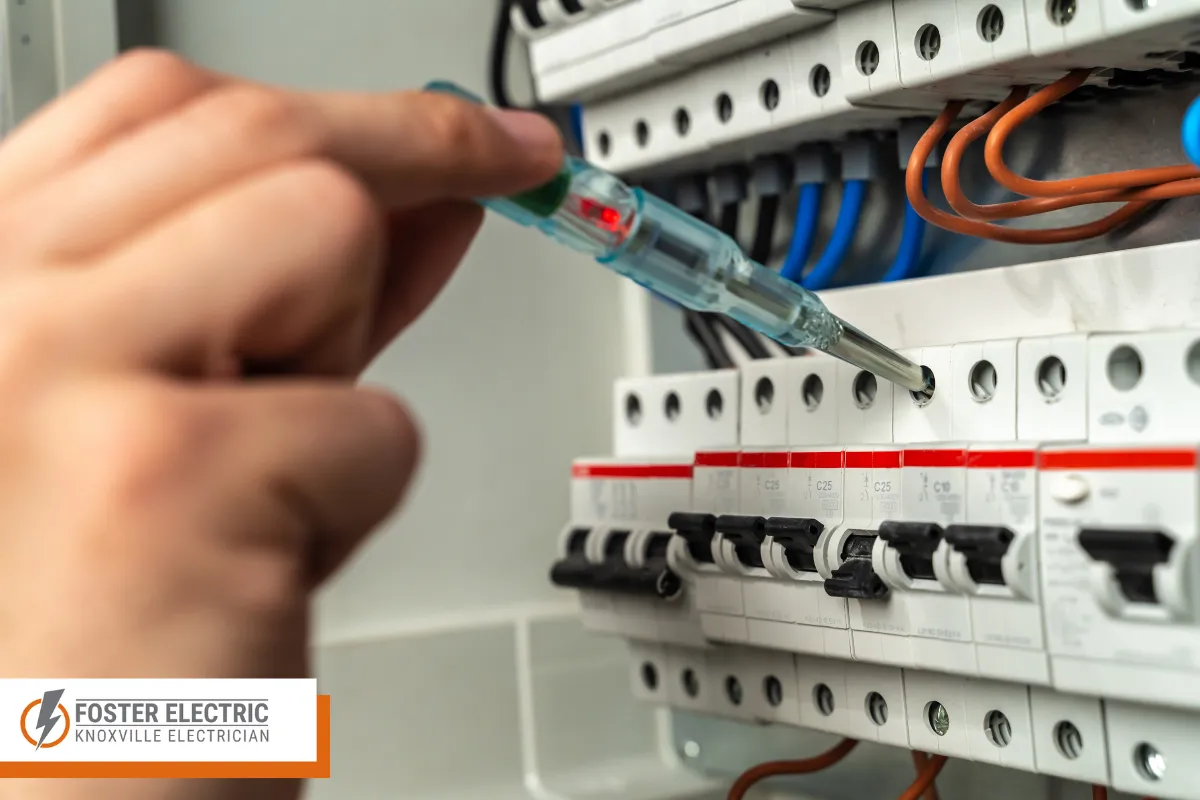
Many older Knoxville houses still have fuse boxes feeding multiple branch circuits throughout the home. These panels were standard in homes built before the mid-1960s, and a good number of them remain in operation today, particularly in neighborhoods with legacy housing stock.
What a Fuse Actually Does
A fuse is a straightforward overcurrent protection unit. It contains a thin metal strip – sometimes called a filament – that is designed to carry a specific amount of electrical current. When current exceeds the fuse’s rating, the metal element heats up and melts, permanently opening the circuit and stopping the flow of electricity. This melting action is what interrupts power during an overload or a dead short, preventing wiring from overheating and potentially starting a fire.
Fuses react quickly to sudden electrical surges, often faster than mechanical devices. Because fuses do not have moving parts, they are less prone to mechanical failure in certain respects. The simplicity of their design is one reason they remained popular for decades.
Common Fuse Types and Ratings
Fuse ratings are matched to wire sizes. For example:
- A 15-amp fuse protects a circuit wired with 14 AWG copper, typically used for lighting
- A 20-amp fuse protects 12 AWG circuits, commonly used for kitchen and bathroom receptacles
- Larger cartridge fuses protect major appliances or feeder circuits
Plug fuses, cartridge fuses, and Edison-base fuses are all styles you might encounter in a Knoxville fuse box. Regardless of type, fuses are one-time use devices that must be replaced once they blow. A blown fuse must be replaced to restore power – there is no way to reset the element.
Where Fuses Still Appear in Knoxville
Fuses are predominantly found in older homes, and Knoxville has plenty of them. You are most likely to encounter fuse panels in:
- Single-family homes built before the 1960s or early 1970s
- Detached garages and small outbuildings that were never modernized
- Homes with original 60-amp service panels
- Historically preserved properties where minimal changes have been made
Fuses are commonly used in older homes for circuit protection, but they are less common in modern homes compared to circuit breakers. Some specialty equipment and large motors may still use fuses for extra protection even when connected to a breaker panel.
Pros of Fuses
- Fast overcurrent reaction, especially during short circuits
- Simple design with no moving mechanical parts
- Low cost per individual unit
- Reliable protection when properly sized and maintained
Cons of Fuses
- Inconvenient: once blown, the fuse must be physically replaced with the correct type and rating
- Fuses present safety hazards when incorrectly replaced – homeowners sometimes install over-sized fuses to stop frequent blowing, which defeats the protection and creates fire risk
- Fuses lack compatibility with modern safety technologies like GFCI and AFCI protection
- Limited panel capacity makes it difficult to add new circuits for today’s appliances
- Fuses can explode under extremely high overload conditions, posing a danger during a serious fault event
If you notice frequently blown fuses, scorch marks around fuse holders, warmth on the panel cover, or buzzing sounds, these are warning signs that demand attention from a licensed electrical contractor in Knoxville.
Circuit Breakers and Breaker Panels: The Modern Standard for Knoxville Electric Service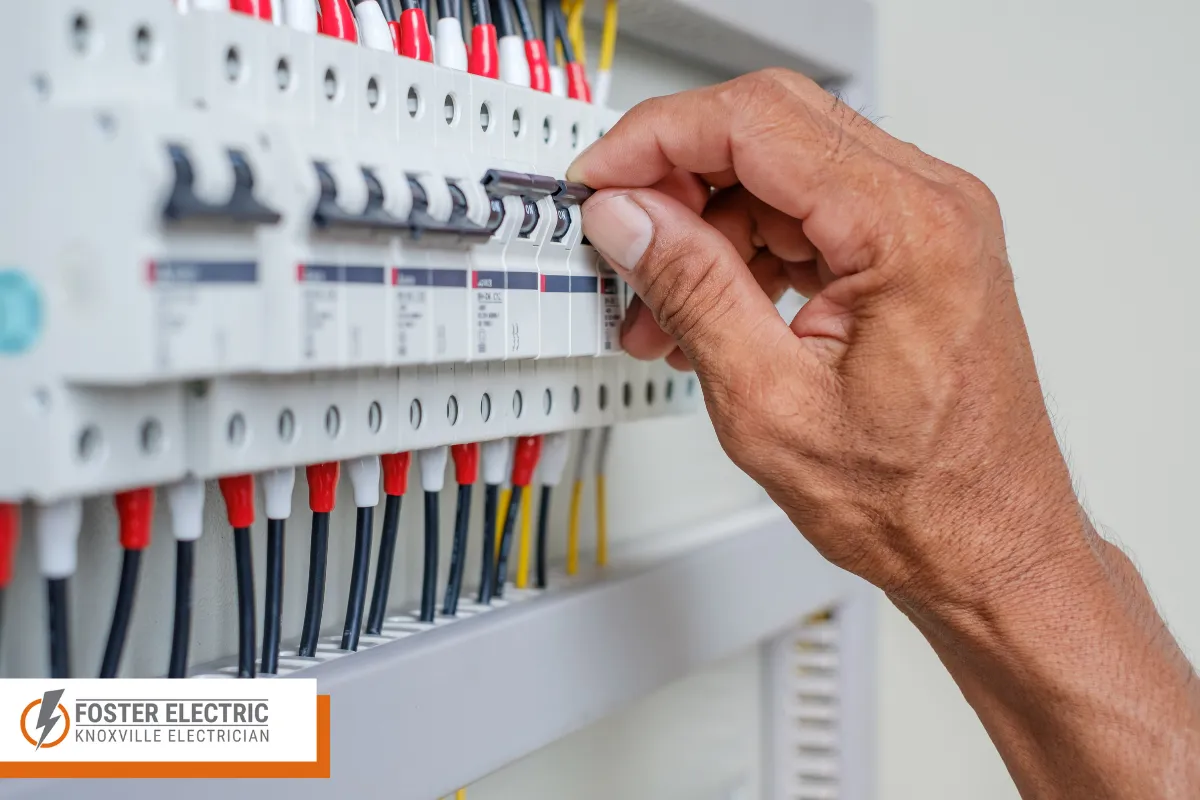
Circuit breakers are now the standard protective devices in most Knoxville residential electrical systems. Virtually every home built after the mid-1960s in the area came equipped with a breaker panel, and local electrical standards mandate modern breaker panels for new construction.
How a Circuit Breaker Works
Circuit breakers use thermal or magnetic triggers to operate. Inside a typical breaker, a bimetallic strip responds to sustained overloads by bending under heat until it trips the mechanism. For short circuits and severe faults, an electromagnet provides near-instantaneous tripping. This dual protection – thermal for overloads, magnetic for short circuits – makes circuit breakers highly effective at safeguarding wiring and equipment.
The key difference from a fuse is that circuit breakers can be reset after tripping. Instead of replacing a destroyed element, you simply flip the breaker handle back to the on position once you have identified and resolved the cause of the trip. Circuit breakers are designed for multiple operations, making them far more convenient for daily life.
Anatomy of a Breaker Panel
A single circuit breaker is one component in a larger assembly. A full breaker panel includes:
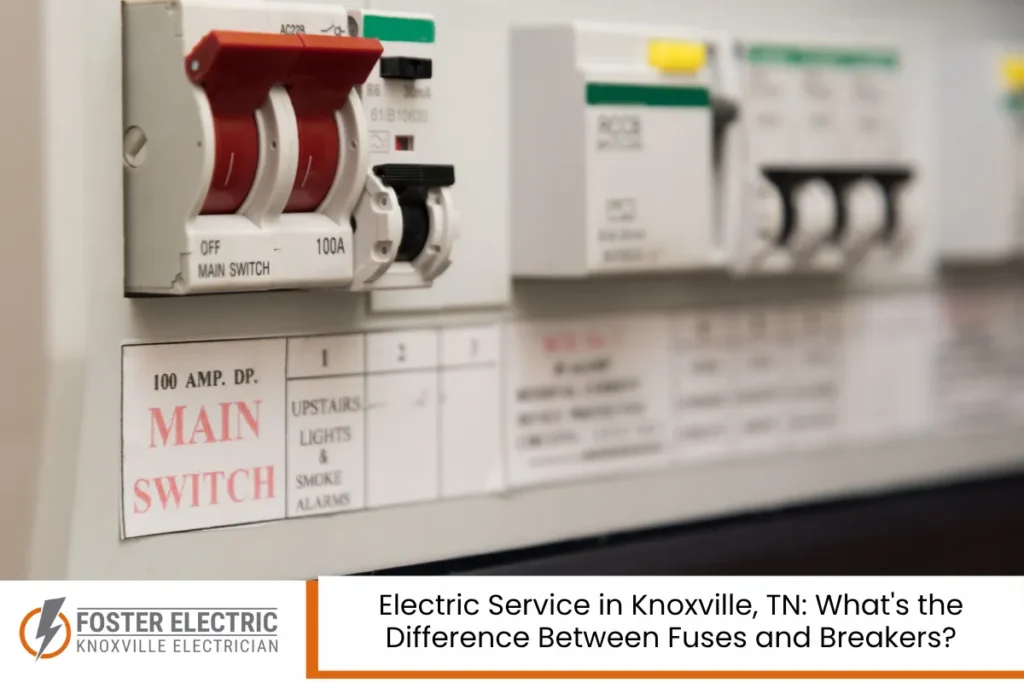
- A main breaker or main power switch that serves as the primary disconnect for the entire house
- Branch breakers that protect individual circuits throughout the home
- Bus bars that distribute power from the main disconnect to each branch breaker
- Neutral and ground bus bars for safe current return paths
- Proper grounding electrode conductors and bonding connections
These panels are commonly used in residential distribution boards and come in various sizes to match a home’s electrical demands.
Common Panel Sizes in Knoxville
- Homes built before the mid-1990s often have 100-amp service
- Many homes upgrading today move to 150-amp or 200-amp panels
- For homes adding EV chargers, heat pumps, hot tubs, or workshops, 200-amp service is now the baseline
- Some high-demand properties are considering 320-amp or larger service
Nationally, about 58 percent of single-family homes now have panels rated at 200 amps or more.
Why Breakers Are Preferred Today
Circuit breakers are preferred for modern high-power appliances and the growing number of devices in today’s homes. They protect against overloads and short circuits simultaneously, and they can support higher electrical loads than fuses. Circuit breakers are preferred for modern electrical systems because they offer a combination of safety, convenience, and adaptability that fuse panels simply cannot match.
Circuit breakers support advanced protection features like GFCI and AFCI. Under current Tennessee code (NEC 2017), AFCI protection is required in most living spaces, and GFCI protection is required in bathrooms, kitchens, garages, and outdoor areas. These features integrate directly into breaker panels, providing shock and arc-fault protection that dramatically reduces fire risk.
Circuit breakers typically cost more to install initially than fuses, but the long-term value in safety, convenience, and compatibility with modern code requirements makes the investment worthwhile.
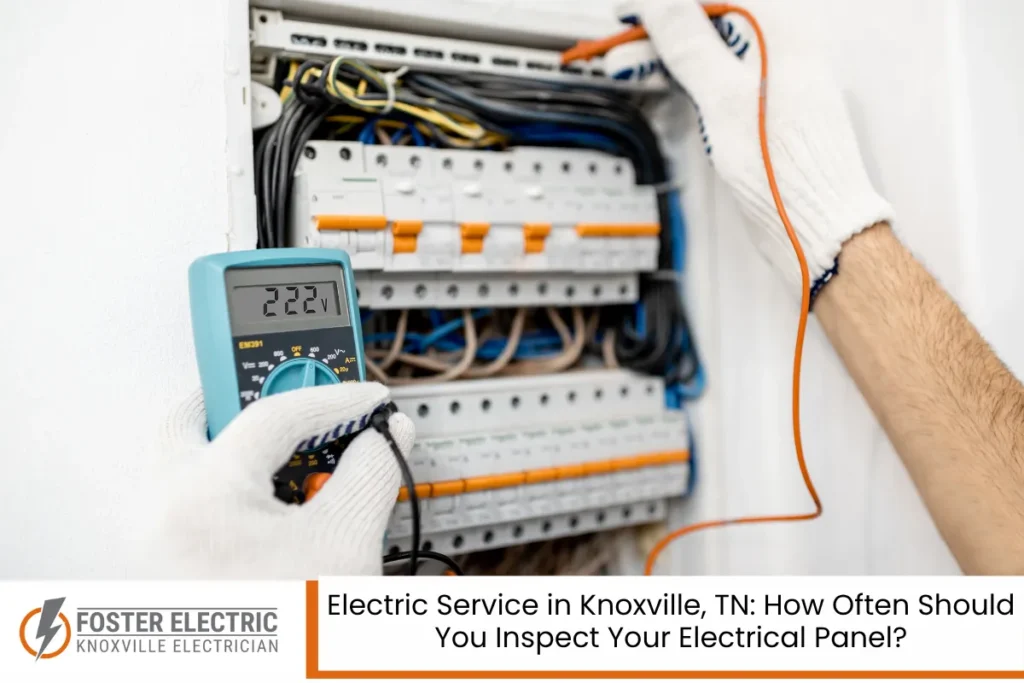
Read Electric Service in Knoxville, TN: How Often Should You Inspect Your Electrical Panel?
A Word of Caution
Even with breaker panels, safety concerns can exist. Outdated brand panels with documented failure-to-trip problems, double-tapped breakers, overloaded bus bars, and improper grounding all present risks. Any upgrades or replacements of breaker panels, service disconnects, or meter bases must be performed and permitted by a licensed Knoxville electrician.
Fuses vs. Circuit Breakers: Practical Differences for Knoxville Homeowners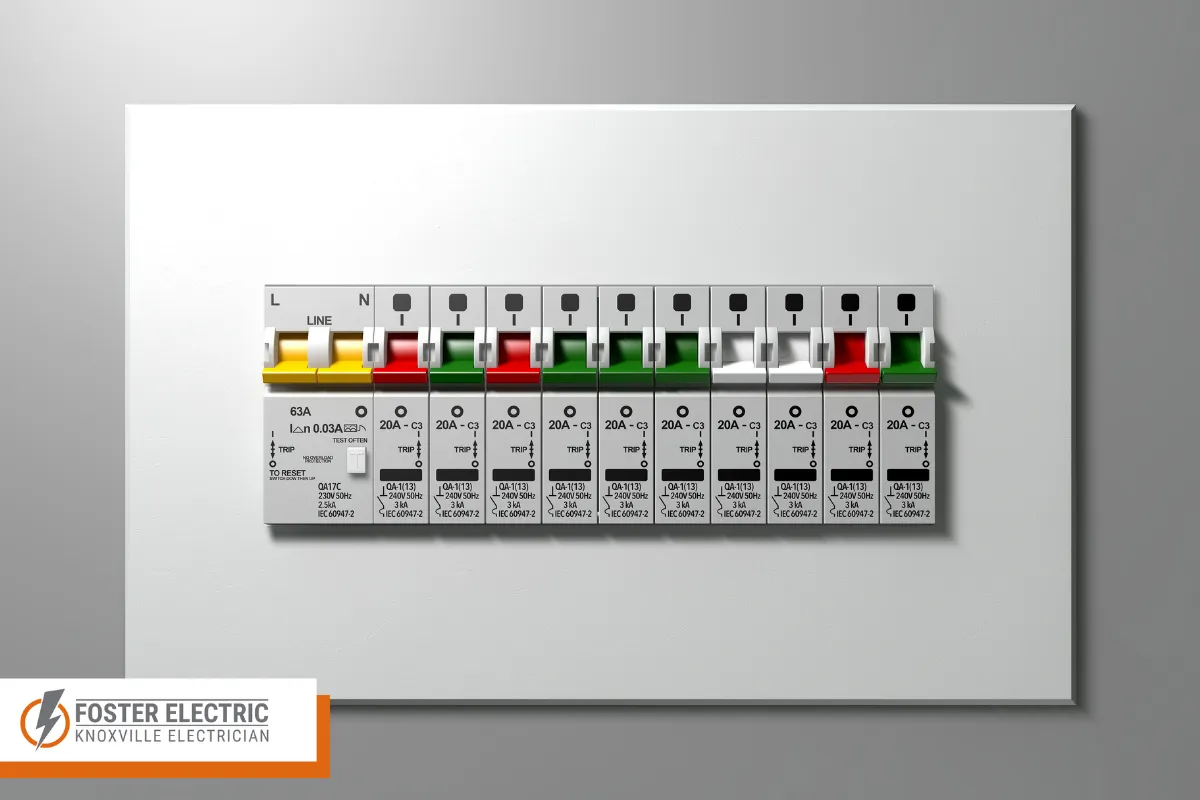
Both fuses and circuit breakers prevent electrical overloads and fires. That shared purpose is where most of the similarity ends. The day-to-day experience of living with a fuse box versus breaker panels is quite different, and understanding those differences helps homeowners make informed choices.
Response, Reset, and Replacement
When a fault occurs, fuses react quickly to sudden electrical surges. The metal strip inside melts almost instantly during a short circuit. Circuit breakers also respond rapidly, though the mechanical trip may take a fraction of a second longer in some overload scenarios.
The real difference shows up after the event. Circuit breakers can be reset after tripping with a simple flip of the handle. Fuses, on the other hand, are permanently destroyed. A blown fuse must be replaced with an identical unit – correct type, correct amperage. If the right spare is not on hand, you are shut out of that circuit until you can get one.
Troubleshooting is also easier with breakers. Each breaker is labeled and can be toggled individually. Fuse panels often lack clear labeling, and identifying which fuse serves which circuit can be frustrating.
Safety Considerations
Fuses can complicate home insurance policies due to safety concerns. Some insurers charge higher premiums or require inspections for homes with fuse panels because of the inherent risks of overfusing and limited protection. Older fuse panels may not meet current electrical codes, which can create complications during a home sale or refinance.
With breaker panels, the risk of installing the wrong protective device is significantly reduced. Circuit breakers are generally safer and more convenient for residential use. Their compatibility with AFCI and GFCI technology adds layers of protection against arc faults and ground faults that fuse systems simply cannot provide.
Convenience in Everyday Life
Consider a typical scenario: a power surge trips a breaker on a Friday evening. You walk to the panel, identify the tripped breaker, flip it back, and carry on. With a fuse box, the same event means finding the right replacement fuse – assuming you have one – and carefully screwing it into the holder in a panel that may be decades old.
Breakers win on efficiency in nearly every practical situation.
Cost and Long-Term Value
Individual fuses cost very little. But the recurring replacement cost, combined with the inconvenience and the potential cost of damage from improperly sized fuses, adds up over time. A full panel upgrade in Knoxville typically ranges from about $2,400 to $4,800 for a 200-amp replacement, depending on the condition of the meter base, grounding, and service wiring. Simpler 100-amp replacements may start around $1,200 to $2,000.
That investment pays dividends in reduced fire risk, improved resale value, and lower insurance costs for your property.
Code Requirements and Local Standards
Knoxville and the state of Tennessee enforce the National Electrical Code for all electrical installations and alterations. Local electrical standards mandate modern breaker panels for new construction. While existing fuse panels are not illegal if they remain in safe working condition, any service change or significant alteration will trigger the requirement to upgrade to current standards, including GFCI and AFCI protections.
Electricians recommend upgrading from fuses to circuit breakers for safety, capacity, and compliance with modern codes.
Signs It May Be Time to Upgrade
Watch for these indicators that your panel needs professional attention:
- Frequently tripping breakers or blown fuses without obvious cause
- No available spaces for new circuits in your panel
- Rust, corrosion, or discoloration on the panel or its components
- A warm or hot panel cover
- Buzzing, crackling, or arcing sounds
- A burning smell near the panel
- Flickering lights when heavy appliances start
- Plans to install high-draw equipment like an EV charger or hot tub
When to Reset and When to Call for Help
Resetting a tripped breaker is generally safe for homeowners. If the breaker stays in position and the circuit functions normally, the trip was likely caused by a temporary overload. But if the breaker trips again immediately, or if you detect a burning odor, feel heat from the panel, or experience a shock, stop what you are doing and contact an electrician. Repeated trips indicate a deeper problem that requires professional expertise to determine the cause and prevent further damage.
An electrical contractor can assess your existing equipment, perform a load calculation, and recommend specific upgrades tailored to your home’s age and demands.
Planning a Safe Upgrade from Fuses to Breakers in Knoxville, TN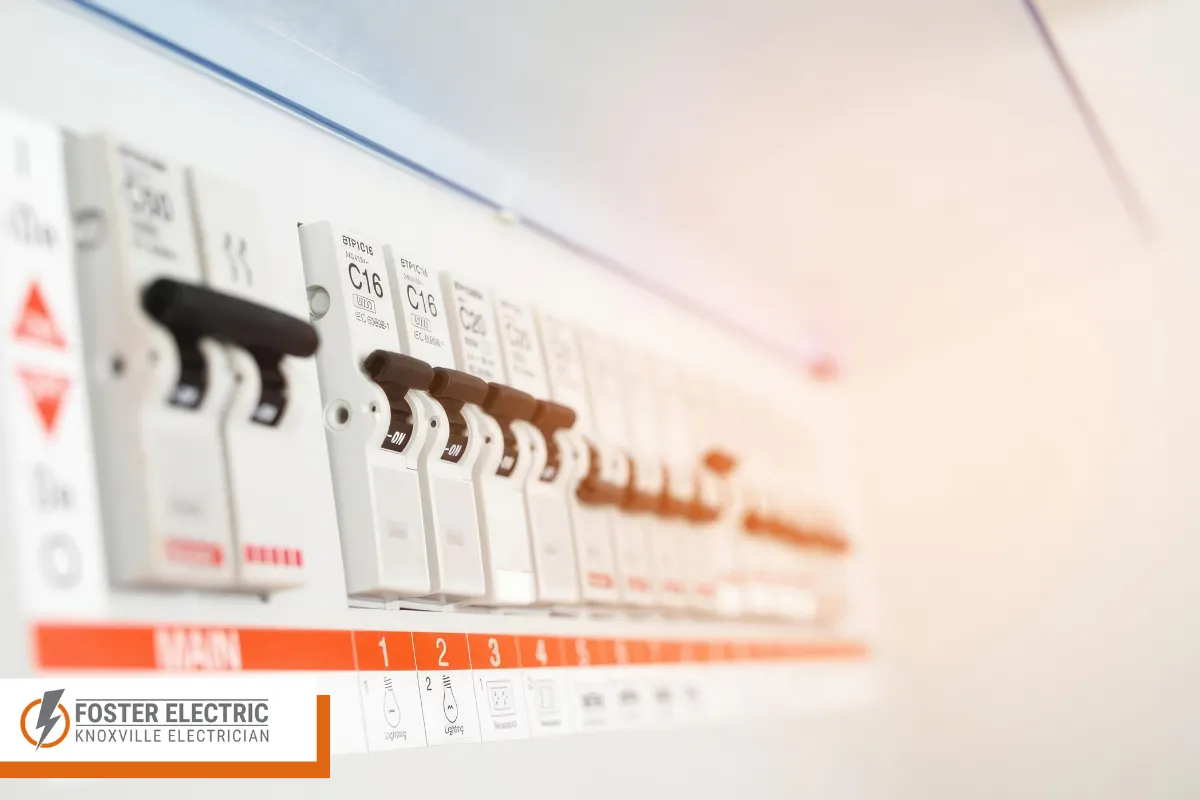
Many homeowners eventually choose to transition from fuse boxes to modern circuit breaker panels. Whether motivated by safety concerns, the need for additional circuits, or plans to add high-power appliances, the upgrade process follows a well-defined path.
What a Typical Upgrade Involves
- Inspection of the existing service wire, meter base, panel condition, grounding, bonding, and wire gauge throughout the house
- Load calculation per NEC Article 220 to determine the correct panel size based on current and anticipated electrical demands
- Panel selection – choosing the right amperage (100A, 150A, 200A, or higher), brand, and configuration to accommodate existing circuits plus room for future growth
- Permits and code compliance – pulling the required permit through the Knoxville Building Department, scheduling inspections, and coordinating with the utility if the meter base or service entrance needs to be changed
- Installation – de-energizing the system, removing the old fuse box, installing the new breaker panel with proper bonding and grounding, wiring all circuits, and adding required GFCI and AFCI breakers
- Final testing and inspection – the electrical inspector reviews the work, the utility restores service, and the electrician verifies voltage, phase balance, and ground integrity
Code and Permit Requirements
Tennessee enforces the NEC 2017 for electrical installations statewide, and the City of Knoxville has adopted the NEC 2023 for construction codes with local amendments. Permits are required for panel replacements and service changes. All work must be performed by a licensed electrician and inspected before the utility reconnects power.
Why the Upgrade Matters
Upgrading is a good time to add dedicated circuits for appliances, HVAC systems, or a workshop – reducing the risk of overloading any single circuit. Homeowners can expect a short period of power shut off during the work, typically a few hours, while the electrician coordinates with the utility.
The benefits extend beyond daily convenience. A modern breaker panel reduces fire risk, brings the home’s electrical system into alignment with current safety standards, and gives future buyers confidence during a home sale. Insurance companies often view modern panels more favorably, which can translate into better coverage terms.
After the work is complete, keep all documentation – permits, receipts, and the panel directory. Make sure every circuit is clearly labeled. Good maintenance starts with knowing exactly what each breaker controls, and that knowledge makes future troubleshooting faster and safer for everyone in the household.
Electric Service in Knoxville, TN – Foster Electric
At Foster Electric, we provide dependable electric service to homeowners throughout Knoxville, Tennessee and the surrounding areas. Our licensed electricians specialize in fuse-to-breaker conversions, breaker panel replacements, troubleshooting frequent trips, and resolving power loss issues. Whether your home needs a full panel upgrade or a thorough inspection of aging wiring, we handle every project with a commitment to code-compliant workmanship and clean installations.
We take the time to educate our customers on how their new panels operate and what to watch for moving forward. Our team is your trusted partner for safe, efficient residential electrical services.
Call Foster Electric today at (865) 246-7037 or fill out our contact form to schedule your visit. We are ready to help protect your home.
Frequently Asked Questions
Can I Replace a Blown Fuse or Reset a Tripped Breaker Myself?
Resetting a tripped breaker is a safe task for most homeowners. Turn off lights and unplug devices on the affected circuit, then flip the breaker firmly to the off position before switching it back on. If it holds, you are fine. Replacing a blown fuse is also manageable if you have the correct replacement and understand the ratings. However, if a breaker trips repeatedly, if you smell something burning, or if the panel feels warm to the touch, do not attempt further resets. These symptoms point to a wiring issue, a failing device, or a serious fault that only a qualified electrician should diagnose and repair.
How Often Should My Electrical Panel Be Inspected in a Knoxville Home?
A general guideline is to have your panel professionally inspected every three to five years, or sooner if your home is more than 25 years old. Homes with original wiring, aluminum branch circuits, or panels from brands with known reliability issues should be checked more frequently. You should also schedule an inspection before any major renovation, after purchasing an older home, or if you notice any of the warning signs discussed in this article. Routine inspections catch loose connections, corrosion, and capacity issues before they become dangerous or expensive to fix.
Will Upgrading from a Fuse Box to a Breaker Panel Lower My Energy Bill?
A panel upgrade is primarily a safety improvement, not an energy efficiency measure. Your electricity consumption depends on the devices and appliances you use, not on the type of overcurrent protection in your panel. However, there can be indirect savings. A new panel eliminates energy wasted through corroded or loose connections, and adding dedicated circuits for high-draw equipment allows those systems to operate more efficiently. A modern panel also enables you to install energy monitoring devices and smart breakers that help you track and reduce consumption over time.
Is It Safe to Add More Circuits to an Older Panel?
It depends entirely on the panel’s capacity and condition. Every panel has a limited number of breaker spaces and a maximum amperage rating. Adding circuits beyond those limits is a code violation and a serious safety risk. Before adding any new circuit, a licensed electrician needs to perform a load calculation to verify that the panel can handle the additional demand. If the panel is full or the total load approaches its rated capacity, the correct solution is a panel upgrade or the addition of a properly sized sub-panel – not creative workarounds like double-tapping breakers.
What Should I Do If My Breaker Panel Makes Buzzing or Crackling Sounds?
Buzzing or crackling from a breaker panel is not normal and should be treated as urgent. Possible causes include a loose breaker connection, a failing breaker, corroded bus bar contacts, or arcing within the panel. If you hear these sounds, do not open the panel cover. Instead, shut off the main power switch if you can do so safely and avoid using any circuits connected to the panel. Contact a licensed electrician immediately. Arcing inside a panel can generate extreme heat and lead to a fire if left unaddressed. This is one situation where waiting is never the right call.
Disclaimer
This article provides general information only and is not a substitute for a professional on-site evaluation. All electrical work in Knoxville and Tennessee must comply with applicable codes and be performed by properly licensed professionals.
Read Warning Signs of Faulty Installation in Your Electric Service in Knoxville, TN